
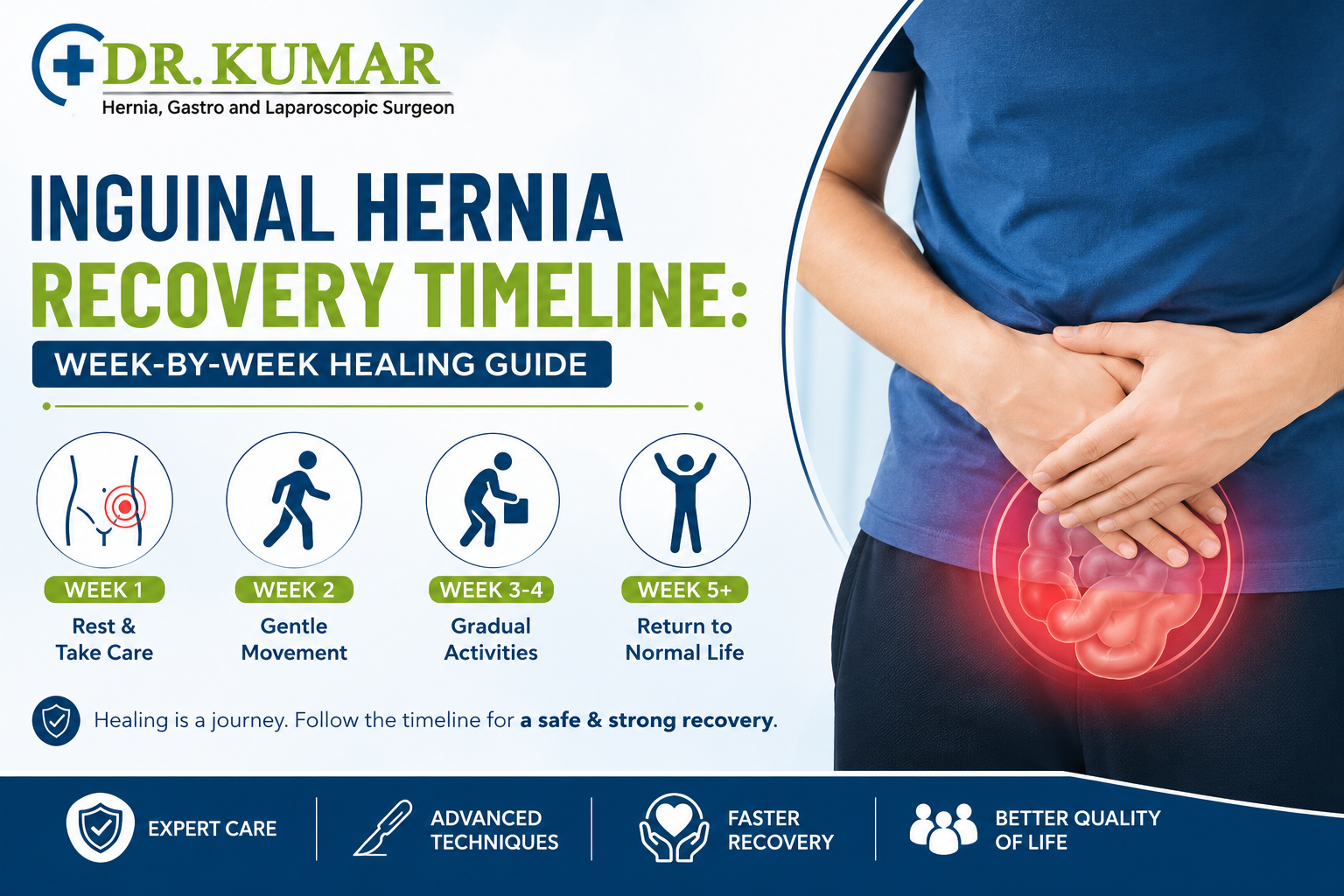
One of the first questions patients ask after being diagnosed with an inguinal hernia is, “How long will recovery take?”
It is a fair concern. Whether you have a physically demanding job, play sport regularly or simply want to return to everyday life without discomfort, understanding the recovery process helps you prepare with confidence.
The good news is that modern hernia surgery has made recovery much smoother than it was years ago. Advances in minimally invasive techniques mean many patients experience less pain, smaller scars and a quicker return to normal activities.
Every patient heals differently, but having realistic expectations can make the journey less stressful.
At DrKumar at Billroth Hospitals, every treatment plan is tailored to the individual. As a leading DrKumar hernia surgeon with extensive experience in laparoscopic and robotic hernia surgery, DrKumar focuses on helping patients recover safely while achieving durable, long-term results.
This guide explains the typical inguinal hernia recovery timeline, what you can expect each week and how different surgical approaches influence healing.
What Is an Inguinal Hernia?
An inguinal hernia develops when tissue, usually part of the intestine or fatty tissue, pushes through a weak area in the abdominal wall near the groin.
Common symptoms include:
- A bulge in the groin
- Pain while lifting
- Discomfort when coughing
- Groin heaviness
- Burning sensation
- Swelling that increases during activity
While some hernias remain stable for a period, they generally do not heal on their own. Surgery remains the definitive treatment.
Does the Type of Surgery Affect Recovery?
Yes.
One of the biggest factors influencing Hernia surgery recovery time is the surgical approach.
DrKumar at Billroth Hospitals carefully evaluates every patient before recommending the most appropriate procedure.
1. Laparoscopic Hernia Surgery
Laparoscopic surgery is one of the preferred options for many patients.
Small incisions and specialised instruments are used to repair the hernia.
Benefits often include:
- Less post-operative pain
- Smaller scars
- Faster mobilisation
- Earlier return to work
- Reduced hospital stay
- Faster recovery
DrKumar laparoscopic hernia surgeon performs minimally invasive repairs designed to support quicker recovery while maintaining excellent surgical outcomes.
2. Robotic Hernia Surgery
Robotic surgery represents the next generation of minimally invasive hernia repair.
Using robotic technology, DrKumar robotic hernia specialist can perform delicate movements with enhanced visualisation and precision.
Potential advantages include:
- High-definition three-dimensional vision
- Precise tissue handling
- Excellent ergonomics
- Reduced post-operative discomfort for suitable patients
- Faster functional recovery in selected cases
For suitable candidates, robotic surgery combines the benefits of minimally invasive surgery with enhanced surgical precision.
3. Open Hernia Surgery
Open surgery continues to play an important role.
Certain large, recurrent or complicated hernias may still require an open repair.
Although recovery may take slightly longer than minimally invasive techniques, open surgery remains a safe and effective treatment when clinically indicated.
Recovery Timeline After Inguinal Hernia Surgery
Every patient’s recovery differs depending on age, health, fitness level and surgical technique.
The timeline below provides a general guide.
Day 1
The first day focuses on rest and gentle movement.
Most patients are encouraged to walk within hours of surgery.
Walking helps improve circulation and lowers the risk of complications.
You may experience:
- Mild groin discomfort
- Tightness around the repair
- Mild swelling
- Fatigue
- Difficulty standing completely upright
Pain is usually manageable with prescribed medication.
Patients undergoing laparoscopic or robotic surgery often find moving around easier compared with traditional open surgery.
Days 2 to 7
The first week is about gradual improvement.
Most patients notice:
- Reduced pain each day
- Better mobility
- Improved appetite
- Easier walking
- Less swelling
It is still important to avoid:
- Heavy lifting
- Gym workouts
- Running
- Cycling
- Strenuous household work
DrKumar hernia specialist encourages gentle walking several times each day because movement supports circulation and recovery.
Week 2
By the second week, many patients feel significantly better.
Most can comfortably perform:
- Office work
- Short drives
- Light household activities
- Gentle outdoor walking
Patients who underwent minimally invasive surgery often regain confidence quickly during this stage.
Although you may feel well, internal healing is still taking place.
Avoid lifting heavy objects unless your surgeon advises otherwise.
This period is often when patients ask How long does hernia recovery take because they feel almost normal.
The answer depends on the body’s internal healing rather than simply how you feel.
Week 3
During the third week, daily activities usually become easier.
Patients often notice:
- Less tightness
- Minimal discomfort
- Improved flexibility
- Greater confidence walking longer distances
- Better sleep
Many people can gradually increase activity under medical guidance.
However, intense exercise should still wait until clearance is given by DrKumar hernia surgeon.
Week 4
For many patients, week four marks another important milestone.
Most individuals have returned to their regular routines.
Those with desk-based jobs are generally working normally.
Patients with physically demanding occupations may still require restrictions.
By this stage, laparoscopic and robotic surgery patients frequently report very little discomfort.
Weeks 5 to 6
Internal tissues continue strengthening.
Many patients begin:
- Light gym activities
- Gentle cycling
- Swimming
- Longer walks
- Moderate exercise
Heavy lifting should still only begin after medical review.
DrKumar robotic hernia surgeon carefully assesses healing before advising patients to resume strenuous physical work.
Weeks 6 to 8
Most patients have resumed everyday life.
The repair continues becoming stronger.
Patients often return to:
- Sports
- Weight training
- Running
- Manual work
- Recreational activities
The exact timing depends on individual recovery and surgeon recommendations.
Three Months and Beyond
Although most patients feel fully recovered long before this stage, deeper tissue healing continues for several months.
Maintaining a healthy weight, avoiding smoking and following lifting advice help reduce the chance of recurrence.
Factors That Influence Recovery
Several factors affect Inguinal hernia surgery recovery.
These include:
- Age
- General health
- Diabetes
- Smoking
- Body weight
- Nutrition
- Physical fitness
- Previous abdominal surgery
- Hernia size
- Surgical technique
- Following post-operative instructions
Choosing an experienced surgeon also contributes to better recovery outcomes.
Tips for Faster Recovery
While healing cannot be rushed, healthy habits support recovery.
Helpful recommendations include:
- Walk regularly
- Drink plenty of water
- Eat high-fibre foods
- Prevent constipation
- Avoid smoking
- Take medication as advised
- Avoid lifting too early
- Attend follow-up appointments
- Listen to your body
- Rest when needed
Small daily improvements often lead to excellent long-term recovery.
Warning Signs That Need Medical Attention
Contact your surgeon immediately if you experience:
- Increasing pain
- Persistent fever
- Excessive swelling
- Redness around the wound
- Pus or wound discharge
- Difficulty passing urine
- Persistent vomiting
- Severe abdominal pain
- Sudden enlargement of the groin swelling
Early medical assessment helps prevent complications.
Can Hernias Come Back?
Modern surgical techniques have significantly reduced recurrence rates.
However, recurrence remains possible if excessive strain is placed on the repair before complete healing.
Maintaining healthy lifestyle habits helps protect the repair.
Following DrKumar hernia specialist’s advice regarding activity restrictions is one of the most important ways to support long-term success.
Why Choose DrKumar at Billroth Hospitals?
Choosing the right surgeon influences both the surgical outcome and recovery experience.
DrKumar at Billroth Hospitals is recognised for treating a wide range of abdominal wall hernias using modern minimally invasive techniques.
Patients choose DrKumar hernia surgeon because of his expertise in:
- Laparoscopic inguinal hernia repair
- Robotic inguinal hernia repair
- Open hernia surgery when clinically required
- Complex abdominal wall reconstruction
- Recurrent hernia surgery
- Personalised treatment planning
As a DrKumar laparoscopic and robotic hernia specialist, his priority is to help patients recover comfortably while achieving a durable repair.
For suitable patients, minimally invasive surgery often offers quicker recovery, reduced pain and an earlier return to normal life compared with conventional approaches.
Final Thoughts
Recovering from hernia surgery is a gradual process rather than a single milestone.
Most patients notice meaningful improvement during the first two weeks, with continued healing over the following months.
Modern laparoscopic and robotic techniques have transformed the recovery experience for many patients, allowing them to return to work, family life and physical activity much sooner than they expect.
If you have been diagnosed with an inguinal hernia or are considering surgery, consulting an experienced specialist is the first step.
DrKumar at Billroth Hospitals provides comprehensive assessment and advanced treatment using laparoscopic surgery, robotic surgery and open surgery, selecting the approach that best suits each patient’s condition.
With the right treatment and proper follow-up, a safe and successful recovery is an achievable goal.
Frequently Asked Questions
How long does inguinal hernia recovery usually take?
Most patients return to light daily activities within one to two weeks. Complete recovery generally takes around six to eight weeks, although healing varies depending on the patient and the type of surgery.
Is recovery faster after laparoscopic or robotic hernia surgery?
For many suitable patients, laparoscopic and robotic hernia surgery offer faster recovery, less post-operative pain and an earlier return to normal activities compared with open surgery.
When can I return to work after inguinal hernia surgery?
Patients with desk jobs often return within one to two weeks. Those performing heavy manual work may need four to eight weeks, depending on healing and their surgeon’s advice.
When can I start exercising after hernia surgery?
Gentle walking is encouraged soon after surgery. More strenuous exercise, gym workouts and heavy lifting should only resume after clearance from DrKumar hernia surgeon.
Why should I consult DrKumar for inguinal hernia surgery?
DrKumar at Billroth Hospitals specialises in laparoscopic and robotic hernia surgery, while also performing open surgery when required. Every treatment plan is tailored to the patient’s condition, lifestyle and recovery goals.