
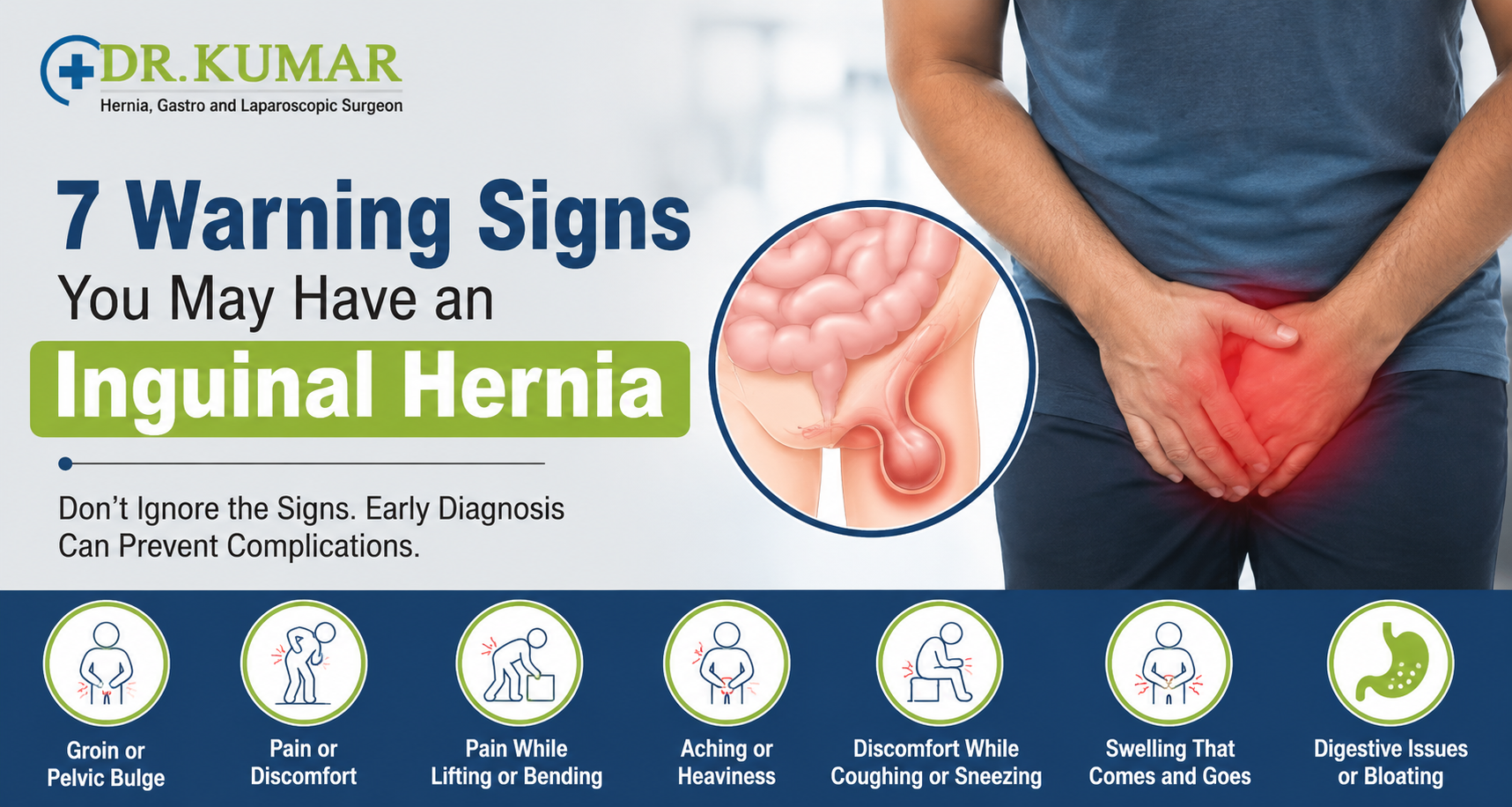
Most people assume a hernia appears suddenly with a large, painful lump. In reality, an inguinal hernia often begins quietly. You may notice a slight heaviness after standing for long hours, mild discomfort while lifting groceries, or a small swelling that comes and goes. These early Inguinal Hernia Symptoms are easy to ignore, especially when they do not interfere with everyday life.
Unfortunately, waiting too long can make the condition worse. An untreated inguinal hernia does not heal on its own. Over time, the opening in the abdominal wall can become larger, increasing the risk of pain and serious complications that may require emergency surgery.
Recognising the Signs of Inguinal Hernia early gives you the opportunity to seek timely treatment before the condition affects your quality of life. With modern minimally invasive techniques such as Laparoscopic Inguinal Hernia Repair and robotic hernia surgery, recovery is often quicker, pain is reduced, and patients can return to normal activities sooner than they expect.
As a leading Dr Kumar Hernia Surgeon at Billroth Hospital, Dr Kumar specialises in advanced laparoscopic and robotic hernia procedures, helping patients receive personalised treatment with excellent long-term outcomes.
In this guide, we’ll explore the seven most common Inguinal Hernia Warning Signs, when you should consult a specialist, and the treatment options available today.
What Is an Inguinal Hernia?
An inguinal hernia develops when part of the intestine or fatty tissue pushes through a weak area in the lower abdominal wall near the groin. It is one of the most common types of hernias and occurs far more frequently in men, although women can also develop the condition.
Several factors can contribute to an inguinal hernia, including:
- Age-related weakening of muscles
- Heavy lifting
- Chronic coughing
- Obesity
- Constipation causing repeated straining
- Previous abdominal surgery
- Family history of hernias
Not everyone experiences severe pain. Many patients first notice subtle Inguinal Hernia Symptoms that gradually become more noticeable over weeks or months.
Why Early Diagnosis Matters
One of the biggest misconceptions is that a hernia can simply be “watched” forever. While some small hernias may initially cause little discomfort, the defect in the muscle does not close naturally.
Ignoring the Signs of Inguinal Hernia can lead to:
- Increasing pain
- Enlargement of the hernia
- Reduced physical activity
- Difficulty performing daily tasks
- Risk of bowel obstruction
- Strangulated hernia requiring emergency surgery
This is why experienced specialists like Dr Kumar Hernia Specialist recommend evaluation as soon as symptoms appear instead of waiting until the condition becomes more complicated.
1. A Visible Bulge in the Groin
The most recognised of all Inguinal Hernia Warning Signs is a swelling or bulge in the groin.
Many patients describe it as:
- A small lump that appears after standing
- A swelling that disappears when lying down
- A soft bulge that becomes more obvious while coughing
Initially, the bulge may be painless. Because it comes and goes, many people dismiss it as temporary muscle strain.
As the hernia grows, the swelling becomes more persistent and noticeable.
If you observe any unexplained lump in the groin, it should always be examined by an experienced Dr Kumar Laparoscopic Hernia Surgeon to determine whether surgery is necessary.
2. Groin Pain During Physical Activity
Pain is not always constant.
Many patients first notice discomfort while:
- Lifting heavy objects
- Exercising
- Running
- Climbing stairs
- Standing for several hours
The pain may feel like:
- Pulling
- Burning
- Pressure
- Sharp discomfort
These Inguinal Hernia Symptoms usually improve after resting because the pressure inside the abdomen decreases.
As the hernia enlarges, everyday movements become increasingly uncomfortable.
3. A Feeling of Heaviness in the Lower Abdomen
Not every hernia causes sharp pain.
Some people simply describe an uncomfortable sensation of:
- Heaviness
- Fullness
- Pressure
- Tightness
This feeling often worsens toward the end of the day, especially for people whose jobs involve prolonged standing.
Many office workers, teachers, healthcare professionals, factory workers, and gym enthusiasts overlook this symptom because it develops gradually.
Dr Kumar Hernia Specialist frequently evaluates patients who ignored this warning sign for months before discovering they had an inguinal hernia.
4. Pain That Improves When Lying Down
This is one of the classic Signs of Inguinal Hernia.
When you lie flat, gravity reduces pressure on the abdominal wall. As a result:
- The bulge may disappear.
- Pain becomes less noticeable.
- Pressure reduces significantly.
Many patients wake up feeling completely normal, only to notice discomfort returning as the day progresses.
Although temporary relief may seem reassuring, it does not mean the hernia has healed. It simply means the tissue has slipped back into the abdomen for the moment.
5. Burning or Aching Sensation Around the Bulge
Some patients experience a dull ache rather than severe pain. Others describe a burning sensation around the swelling, especially after physical exertion.
This discomfort can become more noticeable when:
- Walking long distances
- Carrying children
- Lifting shopping bags
- Coughing repeatedly
- Sneezing
The pain usually reflects increasing pressure on surrounding muscles and tissues. It is another important reason to seek an assessment before the condition progresses.
6. Swelling That Becomes More Noticeable When You Cough or Strain
One of the most telling Inguinal Hernia Symptoms is a bulge that becomes larger whenever pressure inside the abdomen increases.
You may notice the swelling while:
- Coughing
- Sneezing
- Laughing
- Lifting heavy objects
- Straining during bowel movements
- Exercising
This happens because the increased abdominal pressure pushes tissue further through the weakened muscle.
Many patients are surprised to find that the swelling reduces or disappears once they relax. While this may seem harmless, it is actually one of the classic Signs of Inguinal Hernia and should never be ignored.
If you experience these symptoms regularly, it is advisable to consult Dr Kumar Hernia Specialist before the hernia progresses.
7. Severe Pain, Nausea, or a Bulge That Cannot Be Pushed Back
Most inguinal hernias are not emergencies, but there are situations where immediate medical attention is essential.
If the hernia becomes trapped, the blood supply to the intestine may be compromised. This condition is known as a strangulated hernia and requires urgent surgery.
Watch for these serious Inguinal Hernia Warning Signs:
- Sudden, intense groin pain
- A hard or tender lump
- Swelling that cannot be pushed back
- Redness or discoloration over the bulge
- Nausea or vomiting
- Fever
- Severe abdominal pain
- Inability to pass gas or stools
These symptoms should never be ignored. Prompt treatment can prevent serious complications and protect the health of the affected bowel.
How Is an Inguinal Hernia Diagnosed?
Diagnosis is usually straightforward when performed by an experienced hernia specialist.
Dr Kumar begins with a detailed medical history and physical examination. Patients are often asked to stand, cough, or strain gently, as these movements make the hernia easier to identify.
If the diagnosis is uncertain or the hernia is very small, imaging tests such as an ultrasound, CT scan, or MRI may be recommended to confirm the condition and plan treatment accurately.
Early diagnosis allows patients to consider minimally invasive options before the hernia enlarges or becomes complicated.
Modern Treatment Options for Inguinal Hernia
Unlike muscle strains, an inguinal hernia does not repair itself. Surgery remains the only definitive treatment.
Today, patients benefit from several surgical approaches, with the most appropriate option depending on the size of the hernia, previous surgeries, overall health, and individual needs.
Laparoscopic Inguinal Hernia Repair
Laparoscopic Inguinal Hernia Repair is one of the most commonly recommended treatments for suitable patients. Through a few small incisions, a camera and specialised instruments are used to repair the weakened abdominal wall with mesh reinforcement.
Benefits include:
- Smaller incisions
- Less post-operative pain
- Faster recovery
- Earlier return to work
- Lower risk of wound complications
- Excellent cosmetic results
As a highly experienced Dr Kumar Laparoscopic Hernia Surgeon, Dr Kumar has extensive expertise in performing advanced laparoscopic hernia procedures with a focus on safety and long-term success.
Robotic Inguinal Hernia Repair
Robotic hernia surgery represents the latest advancement in minimally invasive hernia treatment. Using robotic-assisted technology, the surgeon gains enhanced precision, improved visualisation, and greater flexibility during the procedure.
For selected patients, robotic surgery may offer:
- Exceptional surgical precision
- Better ergonomics during complex repairs
- Reduced tissue trauma
- Faster recovery in appropriate cases
- Excellent mesh placement and repair quality
As a Dr Kumar Robotic Hernia Surgeon, Dr Kumar routinely evaluates whether robotic surgery is the most suitable option based on each patient’s condition rather than adopting a one-size-fits-all approach.
Open Hernia Repair
Although minimally invasive techniques are preferred whenever appropriate, open surgery continues to have an important role.
Open hernia repair may be recommended for:
- Very large hernias
- Emergency strangulated hernias
- Patients who are not suitable for laparoscopic or robotic surgery
- Certain complex recurrent hernias
Dr Kumar explains every available option in detail, ensuring patients understand why a particular technique is recommended for their specific condition.
Who Is Most at Risk of Developing an Inguinal Hernia?
Although anyone can develop an inguinal hernia, certain factors significantly increase the risk.
You may be more likely to develop one if you:
- Are over the age of 40
- Are male
- Frequently lift heavy weights
- Have a physically demanding occupation
- Have chronic constipation
- Experience persistent coughing
- Are overweight
- Have had previous abdominal surgery
- Have a family history of hernias
- Participate in heavy gym training without proper technique
Even healthy and active individuals can develop an inguinal hernia. That is why recognising early Inguinal Hernia Symptoms is more important than relying on risk factors alone.
Can an Inguinal Hernia Heal Without Surgery?
This is one of the most common questions patients ask.
The simple answer is no.
An inguinal hernia represents a defect in the abdominal wall. Once that weakness develops, it does not close naturally through medication, exercise, or lifestyle changes.
While avoiding heavy lifting may temporarily reduce discomfort, the opening remains. Over time, the hernia often becomes larger and symptoms become more frequent.
Delaying treatment may lead to:
- Larger hernias
- Increased pain
- Reduced mobility
- More complex surgery
- Emergency complications
Seeking early advice from Dr Kumar Hernia Surgeon allows patients to explore minimally invasive treatment before the condition worsens.
What Happens During Recovery?
One of the biggest concerns patients have is how quickly they can return to normal life.
Recovery depends on the surgical technique, overall health, and the complexity of the hernia.
Following Laparoscopic Inguinal Hernia Repair or robotic hernia surgery, many patients can:
- Walk on the same day
- Resume light daily activities within a few days
- Return to office work within one to two weeks
- Resume exercise gradually under medical guidance
- Return to heavy lifting after adequate healing
Dr Kumar provides personalised recovery instructions based on each patient’s occupation and lifestyle to help achieve the best possible outcome.
Why Patients Trust Dr Kumar at Billroth Hospital
Choosing an experienced hernia specialist can make a significant difference to both the surgical experience and long-term results.
Patients choose Dr Kumar at Billroth Hospital because of his expertise in modern hernia management and his commitment to personalised care.
His approach includes:
- Comprehensive clinical evaluation
- Accurate diagnosis
- Individualised treatment planning
- Expertise in laparoscopic hernia surgery
- Advanced robotic hernia surgery
- Open repair when clinically appropriate
- Patient-focused counselling
- Emphasis on long-term recovery and recurrence prevention
Rather than recommending the same procedure for every patient, Dr Kumar carefully evaluates each case and advises the treatment that offers the safest and most effective outcome.
Do Not Ignore the Early Warning Signs
Many patients live with an inguinal hernia for months or even years because the symptoms seem manageable. Unfortunately, the condition rarely improves on its own.
A small bulge today can gradually become a larger, more painful hernia tomorrow. Early consultation allows treatment before complications develop and often makes minimally invasive surgery a suitable option.
If you have noticed any of these Inguinal Hernia Symptoms, including a groin swelling, persistent discomfort, or any of the Signs of Inguinal Hernia discussed above, it is advisable to seek expert evaluation.
With extensive experience in Laparoscopic Inguinal Hernia Repair, robotic hernia surgery, and open hernia repair, Dr Kumar at Billroth Hospital provides comprehensive care tailored to every patient’s needs. Early diagnosis and timely treatment can help you return to your daily routine with greater comfort, confidence, and peace of mind.
Frequently Asked Questions
1. What are the first inguinal hernia symptoms?
Early Inguinal Hernia Symptoms often include a small groin bulge, mild discomfort while standing or lifting, a feeling of heaviness, and pain that improves when lying down. These symptoms may come and go in the early stages.
2. Can an inguinal hernia go away without surgery?
No. An inguinal hernia does not heal naturally because the weakness in the abdominal wall remains. Surgery is the only definitive treatment, and early repair can help prevent complications.
3. Which surgery is better for an inguinal hernia?
The best procedure depends on the individual patient. Dr Kumar may recommend Laparoscopic Inguinal Hernia Repair, robotic hernia surgery, or open hernia repair after evaluating the size of the hernia, previous surgeries, overall health, and lifestyle.
4. Is robotic hernia surgery better than laparoscopic surgery?
Both laparoscopic and robotic hernia surgery are advanced minimally invasive techniques. Robotic surgery offers enhanced precision and may be particularly beneficial for selected complex or recurrent hernias, while laparoscopic surgery remains an excellent option for many patients. Dr Kumar recommends the most suitable approach based on your condition.
5. When should I see a hernia specialist?
You should consult a Dr Kumar Hernia Specialist if you notice persistent groin swelling, increasing pain, discomfort during physical activity, or any Inguinal Hernia Warning Signs. Seek immediate medical attention if the swelling becomes painful, hard, discoloured, or cannot be pushed back into the abdomen.