
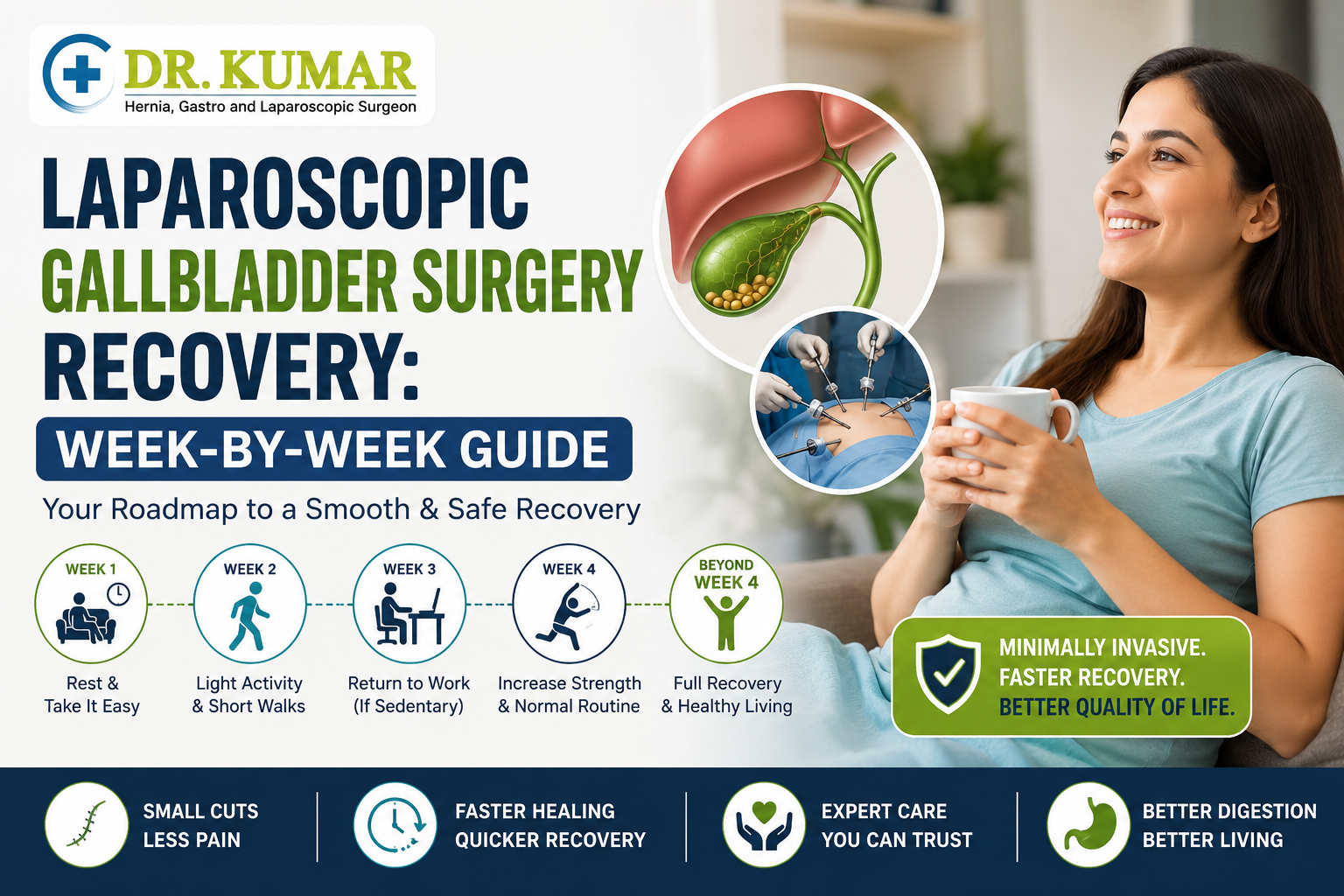
Gallbladder surgery can bring lasting relief from recurring upper abdominal pain, nausea, vomiting, indigestion and other problems caused by gallstones. Still, deciding to undergo surgery is only one part of the journey. Most patients also want a clear idea of what happens afterwards.
When can you return to work? What can you eat after surgery? Is it safe to climb stairs? When can you drive a car or ride a two-wheeler? How long will the pain last?
For most suitable patients, laparoscopic gallbladder surgery recovery is shorter and more comfortable than recovery following traditional open surgery. Many patients can return home on the day of surgery or after a short hospital stay, depending on their health, symptoms and surgical findings.
This guide explains the usual gallbladder removal recovery timeline week by week. Recovery differs from one patient to another, so instructions provided by DrKumar and the treating surgical team should always take priority.
How Is Gallbladder Surgery Performed?
Gallbladder removal is medically known as cholecystectomy. There are three main surgical approaches.
1. Laparoscopic Gallbladder Surgery
Laparoscopic cholecystectomy is performed through a few small cuts in the abdomen. A camera and fine surgical instruments are used to remove the gallbladder.
It is the most commonly used approach for gallbladder removal and generally allows a quicker return to routine activities than open surgery.
DrKumar is an experienced laparoscopic surgeon who assesses whether keyhole surgery is safe and suitable based on the patient’s symptoms, scan findings, previous surgeries and overall health.
2. Robotic Gallbladder Surgery
Robotic gallbladder surgery is also a minimally invasive procedure. During the operation, DrKumar controls the robotic instruments from a surgical console.
The robotic system does not perform the operation independently. It translates the surgeon’s hand movements into precise instrument movements inside the body.
As a laparoscopic and robotic surgeon, DrKumar may consider a robotic approach for selected patients when greater visualisation and instrument control may be useful.
Recovery following robotic gallbladder surgery may be similar to laparoscopic cholecystectomy recovery, although the final timeline depends on the complexity of the condition and the patient’s general health.
3. Open Gallbladder Surgery
Open surgery involves removing the gallbladder through a larger abdominal incision. It may be required when there is severe infection, extensive scar tissue, unexpected anatomy or another concern that makes minimally invasive surgery unsafe.
Recovery after open surgery usually takes longer, with many patients needing several weeks before returning to normal physical activity.
DrKumar gives preference to laparoscopic and robotic surgery when medically appropriate, while keeping open surgery as an important option when patient safety requires it.
Surgery Day and the First 48 Hours
After the operation, you will be monitored until you are awake, comfortable and able to drink fluids.
You may experience:
- Mild to moderate abdominal pain
- Soreness around the small incisions
- Tiredness or drowsiness
- Nausea
- Bloating
- Shoulder-tip discomfort
Shoulder pain can occur because carbon dioxide gas is used to create working space inside the abdomen during laparoscopic surgery. The discomfort usually settles as the gas is absorbed by the body.
Short walks are often encouraged once you are steady enough to move. Walking supports circulation, reduces stiffness and may help ease bloating.
You should arrange for a family member to accompany you home. Avoid driving yourself immediately after surgery.
Week 1: Rest Without Remaining Completely Inactive
The first week of laparoscopic gallbladder surgery recovery is mainly about pain control, wound care, light meals and gentle movement.
You may feel tired even after a simple activity such as bathing, walking around the house or climbing a few stairs. This is normal during the early healing period.
Take short walks several times a day, but do not force yourself to cover long distances. Avoid lifting children, heavy grocery bags, water containers, gas cylinders or suitcases.
Many Indian families encourage complete bed rest after surgery. Too much bed rest may lead to stiffness and weakness. Unless DrKumar advises otherwise, gentle movement is usually better than staying in bed throughout the day.
Keep the wounds clean and dry according to the discharge instructions. Do not apply oil, powder, turmeric, herbal paste or home remedies to the incisions.
What Can You Eat During Week 1?
There is no single compulsory diet for every patient, but lighter meals are often easier to tolerate during the first few days.
Depending on your comfort and medical advice, you may start with foods such as:
- Idli
- Soft rice
- Khichdi
- Dal
- Curd rice
- Lightly cooked vegetables
- Phulka or soft chapati
- Clear soup
- Toast
- Banana or stewed fruit
Avoid overeating. Small meals taken at regular intervals may feel better than a heavy lunch or dinner.
Temporarily limit deep-fried snacks, rich gravies, excess ghee, butter, cream, biryani and very spicy food if they cause discomfort.
Week 2: Returning to Light Work
By the second week, many patients notice a clear improvement in pain, movement and energy.
Patients with desk-based jobs may be able to return to work during this period. People who work from home may resume earlier if they can take breaks and avoid sitting continuously for long periods.
Your return to work depends on:
- The type of surgery performed
- Whether the surgery was planned or an emergency
- The amount of pain or tiredness you still have
- The distance and method of travel to work
- Whether your job involves lifting or prolonged standing
People involved in factory work, construction, nursing, field sales, driving or other physically demanding jobs may need additional recovery time. Official recovery guidance also notes that jobs involving heavy lifting or long periods of standing may require a later return.
Avoid long commutes on crowded buses or trains if sudden movement causes pain. Do not ride a two-wheeler until you can turn comfortably, apply the brakes firmly and respond safely in traffic.
Weeks 3 and 4: Building Strength Gradually
During weeks three and four, most patients feel much closer to normal.
Walking, household activities and office work generally become easier. You may begin increasing your activity level, but heavy lifting and demanding abdominal exercises should still be approached carefully.
Do not assume that the internal tissues have fully healed simply because the skin incisions look better.
Increase physical activity gradually. Start with walking and light stretching after receiving your surgeon’s approval. Avoid immediately returning to heavy gym workouts, weight training, running or contact sports.
This stage of recovery after gallbladder surgery is also when many patients become more comfortable with regular food.
You do not normally need to avoid Indian food permanently. The body usually adjusts to functioning without a gallbladder. Still, very oily meals or large portions may cause temporary bloating, urgency or loose stools in some patients.
Reintroduce richer foods slowly and observe how your body responds.
Weeks 5 and 6: Returning to Your Usual Routine
By weeks five and six, many patients who have undergone uncomplicated laparoscopic or robotic surgery can return to most of their usual activities.
The exact gallbladder surgery recovery time may be longer when:
- Surgery was performed during an active infection
- The gallbladder was severely inflamed
- Stones were present in the bile duct
- Surgery had to be converted to an open procedure
- The patient has diabetes or another condition affecting healing
- The operation was performed as an emergency
- There were complications before or during surgery
Patients recovering from open surgery may need four to six weeks or longer before resuming normal physical activity.
DrKumar reviews each patient individually rather than applying one recovery schedule to everyone.
When Can You Drive After Gallbladder Surgery?
Do not drive while taking pain medicines that cause drowsiness.
You should wait until you can:
- Sit comfortably with a seat belt
- Turn your body to check traffic
- Get in and out of the vehicle without significant pain
- Press the brake firmly
- Perform an emergency stop safely
Long drives should be postponed during the early recovery period. When travelling, take breaks to walk and stretch rather than remaining seated for several hours.
Follow the specific driving advice given by DrKumar, especially if the surgery was complex or converted to an open procedure.
What Should You Avoid During Recovery?
Avoid the following until your surgeon says they are safe:
- Heavy lifting
- Strenuous housework
- Gym training
- Abdominal exercises
- Smoking
- Alcohol during early healing
- Self-medication
- Applying home remedies to the wounds
- Skipping follow-up appointments
- Ignoring increasing pain or fever
Do not start antibiotics, painkillers or digestive medicines based only on advice from friends, relatives or online videos.
Warning Signs That Need Medical Attention
Most patients recover without serious problems, but some symptoms require prompt medical advice.
Contact DrKumar or seek urgent medical attention if you experience:
- Fever or chills
- Severe or increasing abdominal pain
- Persistent vomiting
- Increasing redness or swelling around the incision
- Pus, bleeding or foul-smelling discharge
- Yellowing of the skin or eyes
- Dark urine or very pale stools
- Increasing abdominal swelling
- Breathing difficulty
- Chest pain
- Inability to eat or drink
Worsening pain, jaundice, persistent vomiting and wound problems should not be ignored during recovery.
Do not wait for the next scheduled appointment if your symptoms are becoming more severe.
Why Choose DrKumar for Gallbladder Surgery?
Good surgical care involves more than completing the operation. Patients also need clear explanations, appropriate surgical planning and personalised guidance after discharge.
DrKumar at Billroth Hospitals is primarily a laparoscopic and robotic surgeon with experience in minimally invasive abdominal surgery.
Patients consulting DrKumar receive guidance on:
- Whether gallbladder surgery is required
- Laparoscopic, robotic and open surgery options
- Preparation before surgery
- Expected hospital stay
- Diet after gallbladder removal
- Wound care
- Return to work
- Exercise and travel
- Warning signs during recovery
The treatment approach is based on the individual patient rather than a standard package.
If gallstones are causing repeated pain, vomiting, inflammation, fever, jaundice or pancreatitis, delaying treatment may increase the risk of another painful episode or complication.
Consult DrKumar gallbladder surgeon in Chennai to understand whether surgery is needed and which surgical approach is best suited to your condition.
Medical note: This content provides general information and does not replace personalised medical advice. Follow the medicines, diet, wound-care and activity instructions provided by DrKumar and the treating surgical team.
Frequently Asked Questions
1. How long does laparoscopic gallbladder surgery recovery take?
Many patients can resume light activities within a few days and desk-based work within one or two weeks. Complete recovery depends on the patient’s health, type of work and complexity of the surgery.
2. Can I eat normal Indian food after gallbladder surgery?
Most patients gradually return to a normal diet. During the early recovery period, lighter meals with less oil and spice may be easier to digest. Rich or fried food can be reintroduced slowly based on tolerance.
3. When can I climb stairs after gallbladder surgery?
Many patients can climb stairs carefully after returning home, provided they feel steady and do not have severe pain. Move slowly, use the railing and avoid repeated trips during the first few days.
4. Is robotic gallbladder surgery better than laparoscopic surgery?
Both are minimally invasive approaches. The most suitable method depends on the patient’s condition, previous operations, anatomy and surgical requirements. DrKumar evaluates these factors before recommending an approach.
5. When should I contact DrKumar during recovery?
Contact DrKumar promptly if you develop fever, increasing pain, persistent vomiting, wound discharge, jaundice, severe swelling, breathing difficulty or any sudden deterioration.