
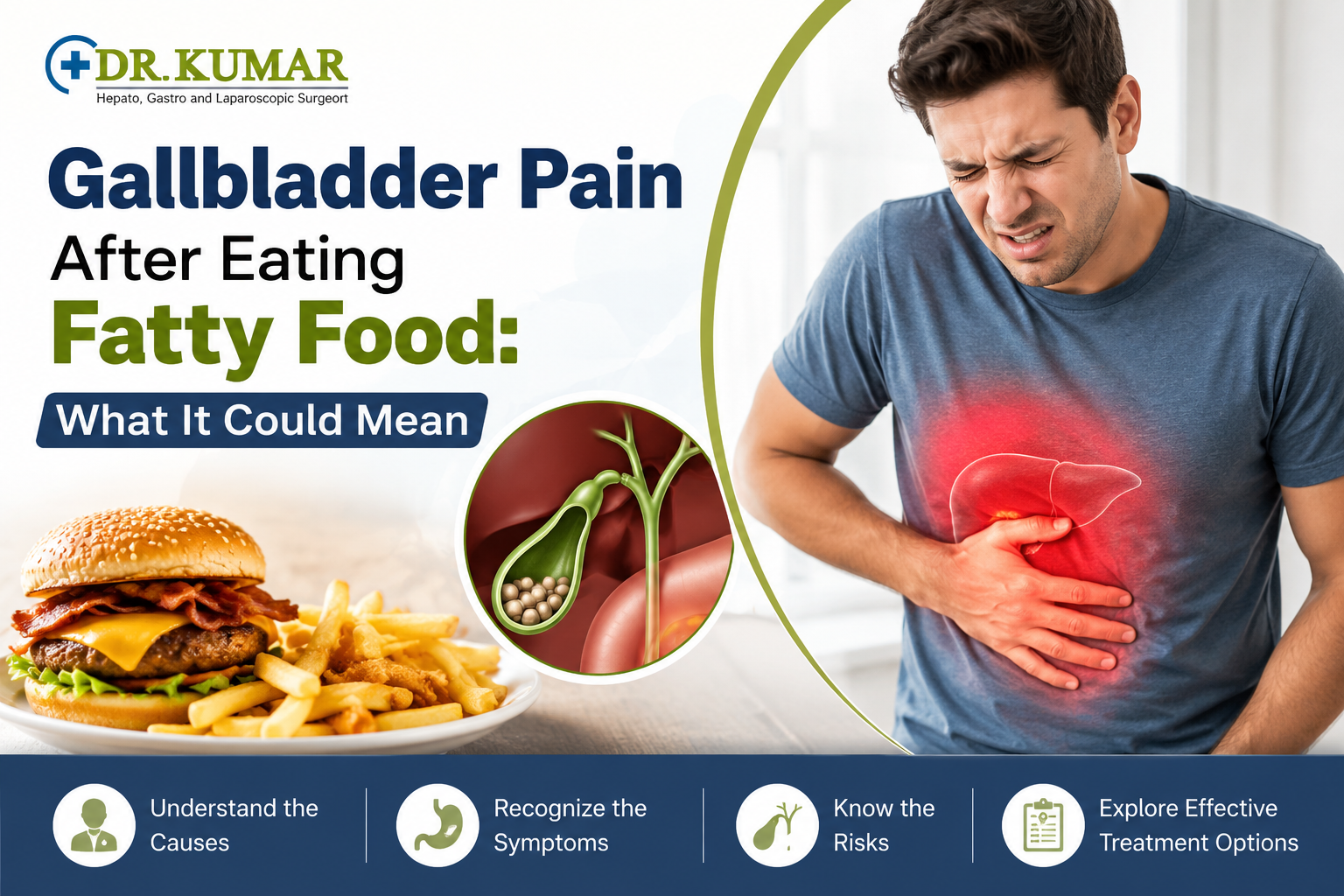
That sharp pain after a rich meal is easy to dismiss at first. Many people blame acidity, gas or overeating. But if the pain keeps returning after fried food, biryani, sweets, fast food or heavy meals, your gallbladder may be asking for attention.
Gallbladder pain often appears in the upper right side of the abdomen or the centre of the upper abdomen. It may spread to the back or right shoulder. It can feel like pressure, cramping, tightness or a deep ache that builds after eating.
The gallbladder stores bile, a digestive fluid that helps the body break down fat. When you eat a fatty meal, the gallbladder contracts to release bile into the intestine. If gallstones block the flow of bile, pain can start. This is commonly called a gallbladder attack or biliary colic. Medical sources such as NIDDK and Mayo Clinic note that gallstone pain often occurs in the upper right abdomen and may follow heavy or fatty meals.
For patients in Chennai looking for clear diagnosis and minimally invasive surgical care, DrKumar at Billroth Hospitals provides expert evaluation for gallbladder problems, with special focus on laparoscopic and robotic surgery.
Why Fatty Food Can Trigger Gallbladder Pain
Fatty food does not usually create gallstones overnight. But it can reveal an existing gallbladder issue.
When a person eats fatty food, the body needs more bile for digestion. The gallbladder squeezes harder to push bile out. If stones are present, they may block the duct temporarily. That blockage can create sudden pain.
This is why Gallbladder pain after eating is commonly noticed after:
- Fried snacks
- Oily curries
- Red meat
- Cheese and cream-based food
- Fast food
- Sweets and desserts
- Large non-vegetarian meals
- Heavy restaurant meals
Some patients say the pain starts 30 minutes to 2 hours after eating. Others feel bloated, nauseous or unusually uncomfortable after rich food.
Johns Hopkins Medicine also describes gallstone-related biliary colic as constant upper abdominal pain that can be aggravated by meals, especially fatty food.
What Gallbladder Pain Feels Like
Gallbladder pain is not the same for everyone. Some people feel intense pain. Others experience repeated discomfort that slowly becomes more frequent.
Common signs include:
- Pain in the upper right abdomen
- Pain in the upper middle abdomen
- Pain spreading to the right shoulder or back
- Nausea after meals
- Vomiting
- Bloating after fatty food
- Heaviness after eating
- Sweating during pain episodes
- Pain that lasts from minutes to hours
Patients often search for Gallbladder pain symptoms when the discomfort becomes repetitive. This is important because repeated symptoms should not be ignored.
Gallstones Symptoms You Should Not Ignore
Gallstones are small hardened deposits that form in the gallbladder. Many people have silent stones and never experience symptoms. The problem begins when a stone blocks the normal movement of bile.
Important Gallstones symptoms may include:
- Sudden upper abdominal pain
- Pain after oily or fatty meals
- Nausea or vomiting
- Indigestion-like discomfort
- Fever with abdominal pain
- Yellowing of the eyes or skin
- Dark urine
- Pale stools
- Persistent pain lasting several hours
The NHS explains that gallstones may not always cause symptoms, but when they cause abdominal pain, surgery to remove the gallbladder may be needed.
If pain is severe, persistent, associated with fever, jaundice or repeated vomiting, medical help should be taken urgently.
Is It Acidity, Gastritis or Gallbladder Pain?
This is one of the most common questions patients ask.
Acidity often causes burning, sour belching or chest discomfort. Gastritis may cause upper abdominal burning or irritation. Gallbladder pain, on the other hand, is often more cramp-like or gripping and is commonly linked with fatty meals.
A simple way to notice the pattern is this:
If pain appears repeatedly after oily food, sits in the upper right abdomen and spreads to the back or shoulder, the gallbladder should be checked.
Only a proper medical evaluation can confirm the cause. DrKumar at Billroth Hospitals may recommend clinical examination, ultrasound and blood tests depending on the symptoms.
How Gallbladder Problems Are Diagnosed
Diagnosis usually begins with a detailed history. DrKumar will ask about the location of pain, timing after food, duration, nausea, vomiting, fever and previous attacks.
Common tests may include:
- Abdominal ultrasound
- Liver function tests
- Complete blood count
- Pancreatic enzyme tests, if needed
- MRCP or CT scan in selected cases
Ultrasound is commonly used to detect gallstones. Blood tests can help identify infection, bile duct obstruction or inflammation.
Early diagnosis helps avoid complications such as acute cholecystitis, bile duct stones, pancreatitis or infection.
When Does Gallbladder Pain Need Surgery?
Not every gallstone needs surgery. Silent stones without symptoms may not require immediate treatment. But when gallstones repeatedly cause pain, inflammation or complications, surgery is often advised.
Mayo Clinic notes that treatment for symptomatic gallstones commonly includes cholecystectomy, which is surgery to remove the gallbladder.
Surgery may be recommended when there is:
- Repeated gallbladder pain after meals
- Acute gallbladder inflammation
- Large or multiple gallstones causing symptoms
- Bile duct obstruction
- Gallstone pancreatitis
- Persistent vomiting with pain
- Fever with gallbladder infection
DrKumar gallbladder surgeon at Billroth Hospitals evaluates the patient carefully before recommending treatment.
Modes of Gallbladder Surgery
As per DrKumar’s surgical approach, patients should understand all three major modes of surgery.
1. Laparoscopic Gallbladder Surgery
Laparoscopic surgery is commonly used for gallbladder removal. It is performed through small cuts using a camera and specialised instruments.
This approach usually offers:
- Smaller cuts
- Less pain
- Faster recovery
- Shorter hospital stay
- Earlier return to routine activity
- Better cosmetic outcome
DrKumar laparoscopic surgeon at Billroth Hospitals has a special focus on minimally invasive treatment for gallbladder disease.
2. Robotic Gallbladder Surgery
Robotic surgery is an advanced minimally invasive option. It gives the surgeon enhanced vision, precision and control during the procedure.
Robotic surgery may be useful in selected patients where advanced accuracy and careful dissection are needed. It can support precise surgical movement, especially in complex anatomy or selected difficult cases.
DrKumar robotic surgeon at Billroth Hospitals gives special importance to robotic and laparoscopic approaches because they help many patients recover more comfortably compared with traditional open surgery.
3. Open Gallbladder Surgery
Open surgery may be needed in some complex cases. This may include severe infection, dense adhesions, complicated anatomy or situations where minimally invasive surgery is not suitable.
Although open surgery remains important, many patients today can be treated using laparoscopic or robotic methods after proper evaluation.
Why Choose DrKumar at Billroth Hospitals?
Gallbladder pain can disturb daily life, food habits and sleep. Many patients begin avoiding meals because they fear another painful attack.
DrKumar at Billroth Hospitals focuses on accurate diagnosis, patient education and suitable treatment planning. The aim is not only to remove the pain but also to prevent future complications.
Patients consult DrKumar gallbladder specialist for:
- Gallbladder pain evaluation
- Gallstone diagnosis
- Laparoscopic gallbladder surgery
- Robotic gallbladder surgery
- Complicated gallbladder disease
- Second opinion for gallstone treatment
- Minimally invasive surgical care
DrKumar is primarily a laparoscopic and robotic surgeon, so suitable patients are guided towards minimally invasive options first. Open surgery is considered when clinically required.
Can Diet Alone Cure Gallstones?
Diet can reduce symptoms for some time, but it cannot reliably dissolve most gallstones.
Avoiding fatty food may reduce attacks temporarily. But if stones are already causing repeated pain, the underlying problem remains.
Patients should not depend only on painkillers or repeated diet control without medical evaluation. Delaying treatment may increase the risk of emergency complications.
A low-fat diet may help while waiting for consultation or surgery, but long-term management depends on the patient’s symptoms and test results.
What to Eat If You Suspect Gallbladder Pain
Until you meet a doctor, it may help to reduce foods that trigger symptoms.
Helpful dietary steps include:
- Eat smaller meals
- Avoid deep-fried food
- Reduce high-fat meat
- Limit cream, cheese and butter
- Avoid heavy late-night meals
- Choose steamed or lightly cooked food
- Drink enough water
- Maintain a healthy weight gradually
Do not follow crash diets. Rapid weight loss can increase the risk of gallstone formation in some people.
When to Seek Immediate Medical Help
Do not wait if the pain is severe or unusual.
Seek urgent care if you have:
- Severe abdominal pain lasting several hours
- Fever or chills
- Yellow eyes or skin
- Repeated vomiting
- Dark urine
- Confusion or weakness
- Pain with breathing difficulty
- Pain spreading with severe sweating
These may indicate complications and need prompt medical assessment.
Final Thoughts
Pain after eating fatty food is not always simple indigestion. When it happens repeatedly, especially in the upper right abdomen, the gallbladder should be evaluated.
Gallbladder pain may be linked to gallstones, inflammation or bile flow obstruction. The good news is that diagnosis is usually straightforward, and treatment options are well established.
For patients looking for expert care, DrKumar at Billroth Hospitals provides evaluation and treatment for Gallbladder disease symptoms, with stronger focus on laparoscopic and robotic surgery, followed by open surgery only when required.
If fatty meals have started causing pain, nausea or fear of eating, it may be time to consult DrKumar gallbladder specialist and get the right diagnosis before the problem becomes an emergency.
FAQs
1. Why do I get gallbladder pain after eating fatty food?
Fatty food makes the gallbladder contract to release bile. If gallstones block the bile flow, pain can occur in the upper abdomen, often after heavy or oily meals.
2. What are the common gallstones symptoms?
Common symptoms include upper right abdominal pain, nausea, vomiting, bloating after fatty meals, pain spreading to the back or shoulder, fever and jaundice in complicated cases.
3. Does gallbladder pain always need surgery?
No. Silent gallstones may not need surgery. But if gallstones cause repeated pain, infection, inflammation or complications, surgery may be recommended after evaluation.
4. What are the surgery options for gallbladder removal?
The main options are laparoscopic surgery, robotic surgery and open surgery. DrKumar at Billroth Hospitals gives more emphasis to laparoscopic and robotic approaches when suitable.
5. When should I consult DrKumar for gallbladder pain?
You should consult DrKumar if you have repeated pain after fatty food, nausea, vomiting, upper right abdominal pain, pain spreading to the back or shoulder, fever or jaundice.