
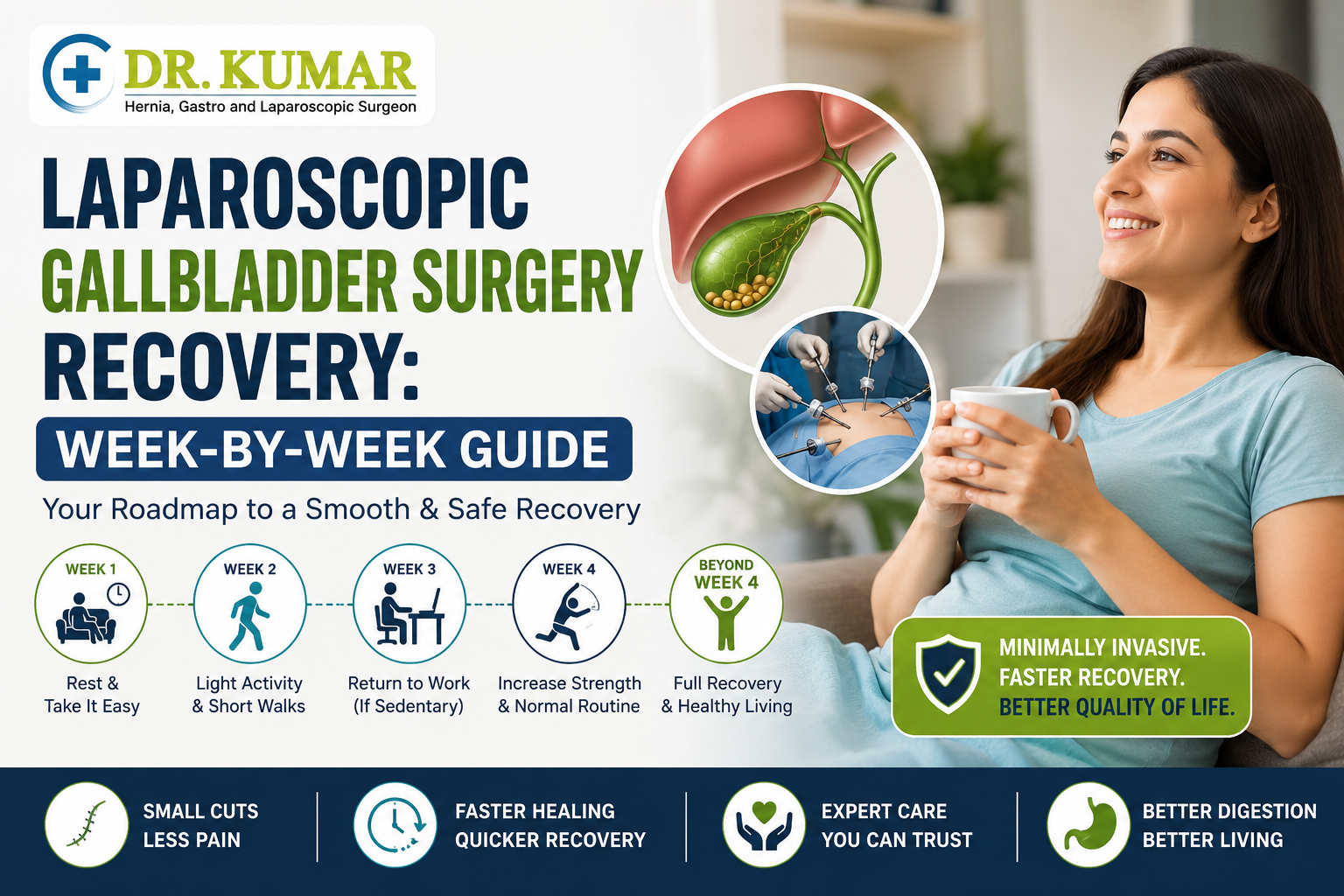
Laparoscopic Gallbladder Surgery Recovery: Week-by-Week Guide

Gallbladder surgery can bring lasting relief from recurring upper abdominal pain, nausea, vomiting, indigestion and other problems caused by gallstones. Still, deciding to undergo surgery is only one part of the journey. Most patients also want a clear idea of what happens afterwards.

When can you return to work? What can you eat after surgery? Is it safe to climb stairs? When can you drive a car or ride a two-wheeler? How long will the pain last?

For most suitable patients, laparoscopic gallbladder surgery recovery is shorter and more comfortable than recovery following traditional open surgery. Many patients can return home on the day of surgery or after a short hospital stay, depending on their health, symptoms and surgical findings.

This guide explains the usual gallbladder removal recovery timeline week by week. Recovery differs from one patient to another, so instructions provided by DrKumar and the treating surgical team should always take priority.

How Is Gallbladder Surgery Performed?

Gallbladder removal is medically known as cholecystectomy. There are three main surgical approaches.

1. Laparoscopic Gallbladder Surgery

Laparoscopic cholecystectomy is performed through a few small cuts in the abdomen. A camera and fine surgical instruments are used to remove the gallbladder.

It is the most commonly used approach for gallbladder removal and generally allows a quicker return to routine activities than open surgery.

DrKumar is an experienced laparoscopic surgeon who assesses whether keyhole surgery is safe and suitable based on the patient’s symptoms, scan findings, previous surgeries and overall health.

2. Robotic Gallbladder Surgery

Robotic gallbladder surgery is also a minimally invasive procedure. During the operation, DrKumar controls the robotic instruments from a surgical console.

The robotic system does not perform the operation independently. It translates the surgeon’s hand movements into precise instrument movements inside the body.

As a laparoscopic and robotic surgeon, DrKumar may consider a robotic approach for selected patients when greater visualisation and instrument control may be useful.

Recovery following robotic gallbladder surgery may be similar to laparoscopic cholecystectomy recovery, although the final timeline depends on the complexity of the condition and the patient’s general health.

3. Open Gallbladder Surgery

Open surgery involves removing the gallbladder through a larger abdominal incision. It may be required when there is severe infection, extensive scar tissue, unexpected anatomy or another concern that makes minimally invasive surgery unsafe.

Recovery after open surgery usually takes longer, with many patients needing several weeks before returning to normal physical activity.

DrKumar gives preference to laparoscopic and robotic surgery when medically appropriate, while keeping open surgery as an important option when patient safety requires it.

Surgery Day and the First 48 Hours

After the operation, you will be monitored until you are awake, comfortable and able to drink fluids.

You may experience:

  1. Mild to moderate abdominal pain
  2. Soreness around the small incisions
  3. Tiredness or drowsiness
  4. Nausea
  5. Bloating
  6. Shoulder-tip discomfort

Shoulder pain can occur because carbon dioxide gas is used to create working space inside the abdomen during laparoscopic surgery. The discomfort usually settles as the gas is absorbed by the body.

Short walks are often encouraged once you are steady enough to move. Walking supports circulation, reduces stiffness and may help ease bloating.

You should arrange for a family member to accompany you home. Avoid driving yourself immediately after surgery.

Week 1: Rest Without Remaining Completely Inactive

The first week of laparoscopic gallbladder surgery recovery is mainly about pain control, wound care, light meals and gentle movement.

You may feel tired even after a simple activity such as bathing, walking around the house or climbing a few stairs. This is normal during the early healing period.

Take short walks several times a day, but do not force yourself to cover long distances. Avoid lifting children, heavy grocery bags, water containers, gas cylinders or suitcases.

Many Indian families encourage complete bed rest after surgery. Too much bed rest may lead to stiffness and weakness. Unless DrKumar advises otherwise, gentle movement is usually better than staying in bed throughout the day.

Keep the wounds clean and dry according to the discharge instructions. Do not apply oil, powder, turmeric, herbal paste or home remedies to the incisions.

What Can You Eat During Week 1?

There is no single compulsory diet for every patient, but lighter meals are often easier to tolerate during the first few days.

Depending on your comfort and medical advice, you may start with foods such as:

  1. Idli
  2. Soft rice
  3. Khichdi
  4. Dal
  5. Curd rice
  6. Lightly cooked vegetables
  7. Phulka or soft chapati
  8. Clear soup
  9. Toast
  10. Banana or stewed fruit

Avoid overeating. Small meals taken at regular intervals may feel better than a heavy lunch or dinner.

Temporarily limit deep-fried snacks, rich gravies, excess ghee, butter, cream, biryani and very spicy food if they cause discomfort.

Week 2: Returning to Light Work

By the second week, many patients notice a clear improvement in pain, movement and energy.

Patients with desk-based jobs may be able to return to work during this period. People who work from home may resume earlier if they can take breaks and avoid sitting continuously for long periods.

Your return to work depends on:

  1. The type of surgery performed
  2. Whether the surgery was planned or an emergency
  3. The amount of pain or tiredness you still have
  4. The distance and method of travel to work
  5. Whether your job involves lifting or prolonged standing

People involved in factory work, construction, nursing, field sales, driving or other physically demanding jobs may need additional recovery time. Official recovery guidance also notes that jobs involving heavy lifting or long periods of standing may require a later return.

Avoid long commutes on crowded buses or trains if sudden movement causes pain. Do not ride a two-wheeler until you can turn comfortably, apply the brakes firmly and respond safely in traffic.

Weeks 3 and 4: Building Strength Gradually

During weeks three and four, most patients feel much closer to normal.

Walking, household activities and office work generally become easier. You may begin increasing your activity level, but heavy lifting and demanding abdominal exercises should still be approached carefully.

Do not assume that the internal tissues have fully healed simply because the skin incisions look better.

Increase physical activity gradually. Start with walking and light stretching after receiving your surgeon’s approval. Avoid immediately returning to heavy gym workouts, weight training, running or contact sports.

This stage of recovery after gallbladder surgery is also when many patients become more comfortable with regular food.

You do not normally need to avoid Indian food permanently. The body usually adjusts to functioning without a gallbladder. Still, very oily meals or large portions may cause temporary bloating, urgency or loose stools in some patients.

Reintroduce richer foods slowly and observe how your body responds.

Weeks 5 and 6: Returning to Your Usual Routine

By weeks five and six, many patients who have undergone uncomplicated laparoscopic or robotic surgery can return to most of their usual activities.

The exact gallbladder surgery recovery time may be longer when:

  1. Surgery was performed during an active infection
  2. The gallbladder was severely inflamed
  3. Stones were present in the bile duct
  4. Surgery had to be converted to an open procedure
  5. The patient has diabetes or another condition affecting healing
  6. The operation was performed as an emergency
  7. There were complications before or during surgery

Patients recovering from open surgery may need four to six weeks or longer before resuming normal physical activity.

DrKumar reviews each patient individually rather than applying one recovery schedule to everyone.

When Can You Drive After Gallbladder Surgery?

Do not drive while taking pain medicines that cause drowsiness.

You should wait until you can:

  1. Sit comfortably with a seat belt
  2. Turn your body to check traffic
  3. Get in and out of the vehicle without significant pain
  4. Press the brake firmly
  5. Perform an emergency stop safely

Long drives should be postponed during the early recovery period. When travelling, take breaks to walk and stretch rather than remaining seated for several hours.

Follow the specific driving advice given by DrKumar, especially if the surgery was complex or converted to an open procedure.

What Should You Avoid During Recovery?

Avoid the following until your surgeon says they are safe:

  1. Heavy lifting
  2. Strenuous housework
  3. Gym training
  4. Abdominal exercises
  5. Smoking
  6. Alcohol during early healing
  7. Self-medication
  8. Applying home remedies to the wounds
  9. Skipping follow-up appointments
  10. Ignoring increasing pain or fever

Do not start antibiotics, painkillers or digestive medicines based only on advice from friends, relatives or online videos.

Warning Signs That Need Medical Attention

Most patients recover without serious problems, but some symptoms require prompt medical advice.

Contact DrKumar or seek urgent medical attention if you experience:

  1. Fever or chills
  2. Severe or increasing abdominal pain
  3. Persistent vomiting
  4. Increasing redness or swelling around the incision
  5. Pus, bleeding or foul-smelling discharge
  6. Yellowing of the skin or eyes
  7. Dark urine or very pale stools
  8. Increasing abdominal swelling
  9. Breathing difficulty
  10. Chest pain
  11. Inability to eat or drink

Worsening pain, jaundice, persistent vomiting and wound problems should not be ignored during recovery.

Do not wait for the next scheduled appointment if your symptoms are becoming more severe.

Why Choose DrKumar for Gallbladder Surgery?

Good surgical care involves more than completing the operation. Patients also need clear explanations, appropriate surgical planning and personalised guidance after discharge.

DrKumar at Billroth Hospitals is primarily a laparoscopic and robotic surgeon with experience in minimally invasive abdominal surgery.

Patients consulting DrKumar receive guidance on:

  1. Whether gallbladder surgery is required
  2. Laparoscopic, robotic and open surgery options
  3. Preparation before surgery
  4. Expected hospital stay
  5. Diet after gallbladder removal
  6. Wound care
  7. Return to work
  8. Exercise and travel
  9. Warning signs during recovery

The treatment approach is based on the individual patient rather than a standard package.

If gallstones are causing repeated pain, vomiting, inflammation, fever, jaundice or pancreatitis, delaying treatment may increase the risk of another painful episode or complication.

Consult DrKumar gallbladder surgeon in Chennai to understand whether surgery is needed and which surgical approach is best suited to your condition.

Medical note: This content provides general information and does not replace personalised medical advice. Follow the medicines, diet, wound-care and activity instructions provided by DrKumar and the treating surgical team.

Frequently Asked Questions

1. How long does laparoscopic gallbladder surgery recovery take?

Many patients can resume light activities within a few days and desk-based work within one or two weeks. Complete recovery depends on the patient’s health, type of work and complexity of the surgery.

2. Can I eat normal Indian food after gallbladder surgery?

Most patients gradually return to a normal diet. During the early recovery period, lighter meals with less oil and spice may be easier to digest. Rich or fried food can be reintroduced slowly based on tolerance.

3. When can I climb stairs after gallbladder surgery?

Many patients can climb stairs carefully after returning home, provided they feel steady and do not have severe pain. Move slowly, use the railing and avoid repeated trips during the first few days.

4. Is robotic gallbladder surgery better than laparoscopic surgery?

Both are minimally invasive approaches. The most suitable method depends on the patient’s condition, previous operations, anatomy and surgical requirements. DrKumar evaluates these factors before recommending an approach.

5. When should I contact DrKumar during recovery?

Contact DrKumar promptly if you develop fever, increasing pain, persistent vomiting, wound discharge, jaundice, severe swelling, breathing difficulty or any sudden deterioration.
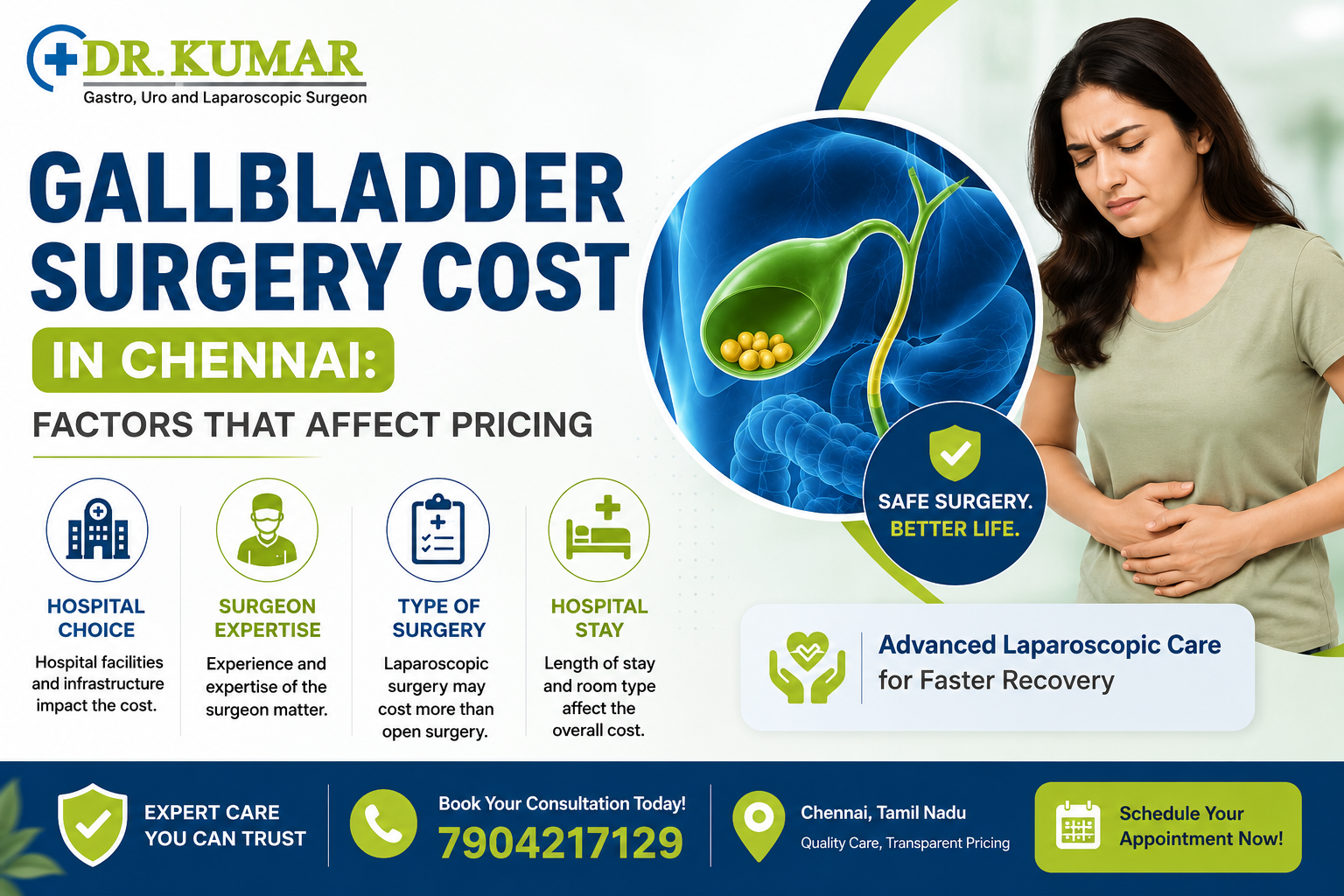
Gallbladder Surgery Cost in Chennai: Factors That Affect Pricing

Gallbladder pain is not something people usually plan for. One day it may feel like acidity after a heavy meal. Another day it can become a sharp pain under the right ribs, sometimes spreading to the back or shoulder. For many patients, the real concern begins after the scan shows gallstones or gallbladder inflammation and the doctor suggests surgery. The first question is natural: what is the gallbladder surgery cost in Chennai?

At Dr Kumar at Billroth Hospitals, patients usually come in with two worries. They want the pain to stop, and they want a clear idea of the cost before making a decision. Both concerns are valid. Gallbladder surgery, also called cholecystectomy, is a common procedure, but the final price can vary from one patient to another. The cost depends on the surgical method, hospital stay, room category, investigations, medical condition, insurance coverage, and whether the case is simple or complicated.

This guide explains the major factors that affect pricing, so you can make a confident and informed choice.

What Is Gallbladder Surgery?

Gallbladder surgery is the removal of the gallbladder, usually done when gallstones cause repeated pain, infection, swelling, vomiting, indigestion, or blockage. The medical term for this surgery is cholecystectomy. When patients search for cholecystectomy cost in Chennai, they are usually looking for the same procedure.

The gallbladder stores bile, a digestive fluid made by the liver. When stones form inside the gallbladder, they can block the normal flow of bile and cause painful attacks. Some people manage symptoms with diet for a short time, but once gallstones start causing repeated pain or infection, surgery is often advised to prevent future complications.

Dr Kumar at Billroth Hospitals focuses on careful diagnosis first. Not every stomach pain is gallbladder pain. A proper consultation, ultrasound scan, blood tests, and clinical examination help confirm whether surgery is actually needed.

Why Does Gallbladder Surgery Cost Differ From Patient to Patient?

Many patients expect one fixed package price, but gallbladder surgery cost in Chennai can change based on several practical factors. A person with simple gallstones and no infection may have a different cost compared to someone with severe inflammation, diabetes, obesity, previous abdominal surgery, or emergency admission.

The surgeon’s expertise also matters. Dr Kumar is primarily a laparoscopic and robotic surgeon, so the treatment plan gives more importance to minimally invasive options whenever suitable. Laparoscopic and robotic surgery may offer better comfort, smaller cuts, faster recovery, and shorter hospital stay in many cases. Open surgery is still important, but it is usually considered when the patient’s condition or surgical difficulty demands it.

Main Types of Gallbladder Surgery

Before comparing pricing, it is important to understand the available surgical modes. At Dr Kumar at Billroth Hospitals, the approach is usually explained in this order:

1. Laparoscopic Gallbladder Surgery

Laparoscopic cholecystectomy is one of the most preferred methods for gallbladder removal. It is done through small cuts using a camera and fine instruments. For many patients, this means less pain, smaller scars, quicker walking, and faster discharge.

Because laparoscopic surgery is widely used, the cholecystectomy cost in Chennai for this method is often more predictable than robotic surgery. It is commonly suitable for gallstones, recurrent gallbladder pain, and many non complicated gallbladder conditions.

Patients searching for the best hospital for gallbladder surgery Chennai often look for a place where laparoscopic surgery is performed regularly by an experienced surgeon. However, the hospital alone should not be the only deciding factor. The surgeon’s judgment, comfort with minimally invasive surgery, emergency handling, and post surgery guidance are equally important.

2. Robotic Gallbladder Surgery

Robotic surgery is a more advanced minimally invasive method. It gives the surgeon enhanced vision, better precision, and refined instrument control. For selected patients, robotic surgery can be useful, especially where fine dissection and surgical accuracy are important.

Since robotic technology involves advanced equipment and specific consumables, the cost may be higher than standard laparoscopic surgery. When patients ask about gallbladder surgery cost in Chennai, they should ask whether the quote is for laparoscopic, robotic, or open surgery. Comparing prices without knowing the method can be misleading.

Dr Kumar at Billroth Hospitals gives strong importance to laparoscopic and robotic approaches because they support modern surgical care and patient comfort. The final choice depends on the patient’s condition, scan findings, budget, and clinical suitability.

3. Open Gallbladder Surgery

Open surgery uses a larger incision. It may be required in complicated cases, severe infection, dense adhesions, bleeding risk, unclear anatomy, or when laparoscopic surgery is not safe. Sometimes a laparoscopic surgery may need to be converted to open surgery for patient safety.

Open surgery can involve a longer hospital stay and slower recovery. The cost may be affected by additional medicines, longer room charges, wound care, and follow up needs. While open surgery is not the first preference for many routine cases, it remains an important and safe option when required.

Average Gallbladder Surgery Cost in Chennai

The gallbladder surgery cost in Chennai can vary widely. Some laparoscopic packages may start from a lower range, while advanced centres, higher room categories, robotic surgery, complex cases, and insurance billing can increase the total amount.

Instead of choosing only the lowest price, patients should look at what is included in the estimate. A cheaper quote may not always include investigations, medicines, anaesthesia, consumables, room charges, emergency care, or follow up visits.

When you consult Dr Kumar at Billroth Hospitals, you can ask for a clearer estimate based on your actual diagnosis. This is more useful than relying on a general online price because your scan report, blood tests, medical history, and surgery type all influence the final cost. In general, it’s 80,000 to 1.5 lakhs INR. Depending on the severity of the infection, the duration of stay in the hospital, and the medicines used.

Factors That Affect Gallbladder Surgery Pricing

1. Type of Surgery

Laparoscopic, robotic, and open surgery have different pricing structures. Laparoscopic surgery is commonly preferred and often offers a good balance between safety, comfort, and cost. Robotic surgery may cost more because of technology and equipment usage. Open surgery may be costlier in complicated cases because of longer admission and recovery needs.

2. Surgeon’s Experience

Gallbladder surgery needs careful handling because the bile duct, liver, and surrounding structures are close to the gallbladder. An experienced laparoscopic and robotic surgeon can assess the anatomy, identify risk factors, and decide the safest route.

Dr Kumar at Billroth Hospitals focuses on surgical planning, patient counselling, and minimally invasive care where suitable. Patients should not look at cost alone. They should also consider safety, clarity, and the surgeon’s ability to manage difficult situations.

3. Severity of the Gallbladder Problem

A simple gallstone case may cost less than a case with acute cholecystitis, pus formation, pancreatitis, jaundice, or bile duct stones. If the patient comes during an emergency, additional tests and urgent management may be needed.

Early consultation can sometimes make the treatment journey smoother. Ignoring repeated gallbladder pain may lead to infection or emergency admission, which can increase both risk and cost.

4. Diagnostic Tests

Before surgery, the patient may need an ultrasound scan, liver function tests, blood tests, ECG, chest evaluation, and anaesthesia fitness. In some cases, MRCP or CT scan may be advised if bile duct stones or complications are suspected.

These tests are not just formalities. They help Dr Kumar understand whether laparoscopic or robotic surgery is suitable and whether additional treatment is needed before surgery.

5. Hospital Stay and Room Category

The total bill changes depending on whether the patient chooses a general room, semi private room, private room, or deluxe room. A longer stay naturally increases the cost.

Many laparoscopic gallbladder surgery patients may need a shorter stay if recovery is smooth. Open surgery or complicated cases may need more days of admission.

6. Anaesthesia and Operation Theatre Charges

Gallbladder surgery is usually done under general anaesthesia. The anaesthesia team, operation theatre time, equipment, monitoring, and recovery room care are part of the cost. Robotic surgery can involve additional theatre setup and equipment related charges.

7. Medicines and Consumables

Surgical clips, sutures, disposable instruments, antibiotics, pain medicines, IV fluids, and dressings can affect the final bill. In robotic and advanced laparoscopic surgery, consumables may be a significant part of the total cost.

8. Insurance Coverage

Many patients use health insurance for gallbladder surgery. The approved amount depends on the insurance policy, room eligibility, package limits, co payment, waiting period, and cashless approval rules. Patients should check with the insurance desk before admission.

At Dr Kumar at Billroth Hospitals, patients can discuss the expected cost and billing process before surgery, so there are fewer surprises.

Recovery Time After Gallbladder Surgery

Recovery time after gallbladder surgery depends on the method used and the patient’s health. After laparoscopic surgery, many patients start walking the same day or the next day and return to light routine activities within a few days. Desk work may be possible within a short period if the surgeon allows it.

Robotic surgery also follows a minimally invasive recovery pattern in suitable cases. Open surgery usually takes longer because the incision is bigger and healing needs more time.

Food habits may need small changes for a few weeks. Most patients are advised to eat light, avoid oily food initially, drink enough water, and follow the medicine schedule. Dr Kumar gives recovery advice based on the patient’s surgery, age, lifestyle, and medical condition.

How to Choose the Right Place for Gallbladder Surgery in Chennai

When people search for gallbladder surgery hospitals Chennai, they often compare location, cost, rooms, and online reviews. These are useful, but the most important question is whether the surgeon can provide safe, clear, and suitable treatment.

The best hospital for gallbladder surgery Chennai is not just about a building or brand name. For many patients, it is about choosing the right surgeon, the right surgical method, and a team that explains the process properly.

Dr Kumar at Billroth Hospitals offers consultation for patients who want a practical opinion on gallbladder pain, gallstones, and surgery options. The focus is on Dr Kumar’s laparoscopic and robotic expertise, with open surgery available when medically needed.

Questions to Ask Before Confirming Surgery

Before finalising your surgery, ask these questions:

What type of surgery is advised for me: laparoscopic, robotic, or open?

What is included in the estimate?

Will I need any extra scan or test?

How many days will I stay in the hospital?

What is the expected recovery time after gallbladder surgery?

When can I return to work?

What warning signs should I watch for after discharge?

Will my insurance cover the surgery?

These questions help you compare value, not just price.

Why Patients Prefer Dr Kumar at Billroth Hospitals

Patients choose Dr Kumar at Billroth Hospitals because they want clarity, modern surgical options, and confidence before undergoing surgery. Dr Kumar gives more emphasis to laparoscopic and robotic surgery where suitable, while keeping patient safety as the priority. Open surgery is considered when it is the safer or more appropriate choice.

The consultation is designed to help patients understand the diagnosis, reason for surgery, expected cost, recovery time, and aftercare. This matters because gallbladder surgery is not only about removing an organ. It is about removing recurring pain, preventing complications, and helping the patient return to normal life with peace of mind.

Final Thoughts

The gallbladder surgery cost in Chennai depends on the surgical method, patient condition, hospital stay, room choice, tests, insurance, and whether the case is routine or complicated. Laparoscopic surgery is commonly preferred for faster recovery and smaller cuts. Robotic surgery offers an advanced minimally invasive option for selected patients. Open surgery is reserved for situations where it is needed for safety.

If you are comparing cholecystectomy cost in Chennai, do not choose based only on the lowest number. Choose based on the surgeon’s experience, treatment clarity, safety standards, and the type of care you receive before and after surgery.

For gallbladder pain, gallstones, or repeated digestive discomfort, book a consultation with Dr Kumar at Billroth Hospitals and get a clear treatment plan based on your condition.

FAQs

1. What is the average gallbladder surgery cost in Chennai?

The gallbladder surgery cost in Chennai varies depending on severity of the infection, the duration of stay in the hospital, and the medicines used. In general, it’s 80,000 to 1.5 lakhs INR. Laparoscopic surgery may have a different cost from robotic or open surgery. A consultation with Dr Kumar at Billroth Hospitals can help you get a more accurate estimate.

2. Is laparoscopic gallbladder surgery better than open surgery?

Laparoscopic gallbladder surgery is often preferred because it uses smaller cuts, usually causes less pain, and may allow faster recovery. Open surgery is still important in complicated cases or when patient safety requires it.

3. Is robotic gallbladder surgery available?

Yes, robotic surgery may be considered for selected patients. Dr Kumar at Billroth Hospitals is primarily a laparoscopic and robotic surgeon, so both minimally invasive options can be discussed during consultation.

4. What is the recovery time after gallbladder surgery?

Recovery time after gallbladder surgery depends on the method used. Laparoscopic and robotic surgery usually allow faster recovery than open surgery. Many patients return to light routine activities within a few days after minimally invasive surgery, based on medical advice.

5. How do I choose among gallbladder surgery hospitals Chennai?

Look beyond the hospital name. Choose a surgeon who explains the diagnosis, surgery type, cost, risks, recovery, and aftercare clearly. Patients looking for the best hospital for gallbladder surgery Chennai can consult Dr Kumar at Billroth Hospitals for laparoscopic, robotic, and open surgery guidance.

Call Now Button